
Your paint is degrading right now. Most people don’t notice until it’s too late to fully correct it.

The scratches, swirls, and oxidation in your paint aren’t cosmetic nuisances. They’re breaches in the protective layer. Every one of them allows UV rays, water, and contaminants to work deeper into the clear coat over time.
Unfortunately, clear coat does not grow back. Once it’s gone past a certain point, correction is no longer possible - only repainting is. And that’s not a detail job. That’s a body shop one.
Correction exists to remove those defects before they cross that line. And more importantly, it gives you a surface that is actually worth protecting.
Why Correction costs what it costs
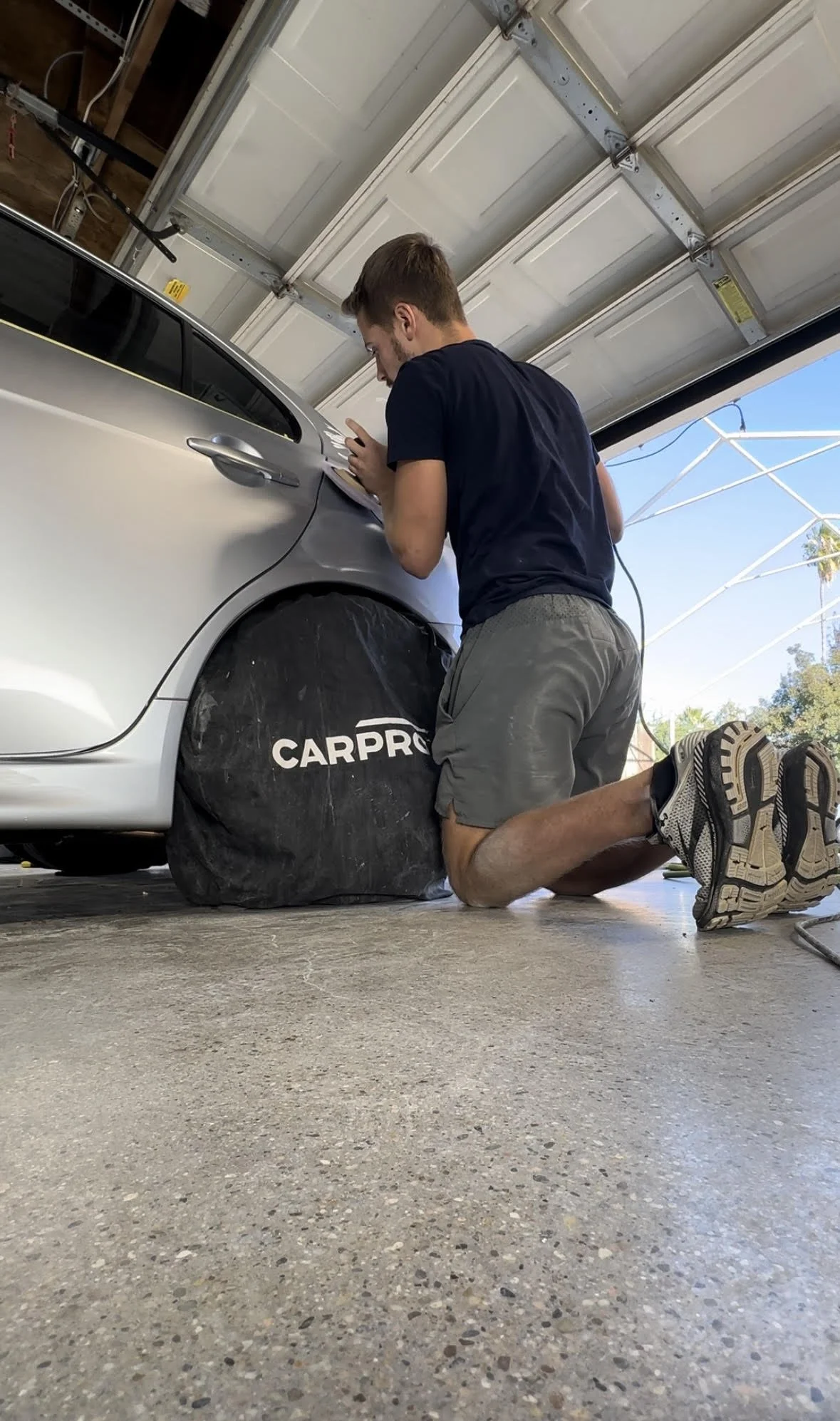
Most people see a Correction quote and compare it to a detail. That’s the wrong comparison. A detail cleans surfaces. Correction physically removes defects from your paint using a sequence of machine polishing steps - each one requiring measurement, assessment, and controlled abrasive work under the right conditions. Every vehicle is different. Every pass matters. This is 5 to 15 hours of skilled work, performed at the shop, on a surface where mistakes are permanent.
When you understand what’s actually happening to your paint during a Correction - and what happens to it if that work isn’t done - the investment looks different.
Correction isn’t something you choose. It’s something we determine.
There’s no menu of correction levels to pick from. After your Condition Assessment, we look at two things to determine what level of correction is appropriate for your vehicle. Both matter equally.
-
Paint Condition
What is the paint actually capable of?
We measure the clear coat thickness before anything else. A paint gauge tells us what’s there to work with. Combined with a visual assessment of defect depth, oxidation level, and surface condition, this determines the ceiling - the best result the paint is physically capable of achieving.
A vehicle with heavy oxidation and shallow clear gets a different prescription than a lightly swirled vehicle with plenty of clear coat left. The paint tells us what’s possible.
-
Client Goals
What are you planning to do with this vehicle?
A client who plans to keep the vehicle for ten years gets a different recommendation than a client who is prepping to sell. The correction level has to match the investment the vehicle warrants.
We never over-correct for a vehicle the client is selling in 6 months. And we never under-correct a vehicle the client plans to drive and protect for years. The goals tell us exactly how far to go.
How it Works in Practice
-
HOW IT SHAPES THE CORRECTION RECOMMENDATION
Higher correction intensity required. Multi-stage compound and polish. More time, more passes. the ceiling on results may be lower if clear coat is thin, but the process is more involved.
-
HOW IT SHAPES THE CORRECTION RECOMMENDATION
A lighter polishing approach is often sufficient. Less time, less material removal. The correction level is matched to what’s actually needed - not maxed out by default.
-
HOW IT SHAPES THE CORRECTION RECOMMENDATION
Correction is taken as far as the paint will allow. We’re building a surface that a ceramic coating will bond to and that will perform for years. This justified multi-stage work.
-
HOW IT SHAPES THE CORRECTION RECOMMENDATION
Correction is calibrated to the return. Enough to make a material difference in appearance and value - not more than the situation warrants.
-
HOW IT SHAPES THE CORRECTION RECOMMENDATION
We assess whether protection alone would be premature. If the paint has uncorrected defects, coating over them seals the problem in. Correction first, protection after - or we have a direct conversation about what’s realistic.
-
HOW IT SHAPES THE CORRECTION RECOMMENDATION
This constrains what’s possible regardless of the client’s goals. We will not over-correct a vehicle that doesn’t have the clear coat to support it. WE explain the limitation honestly and recommend accordingly.
Every correction recommendation comes out of your Condition Assessment. We look at the paint, we talk about your plans, and we tell you exactly what we recommend and why.
What Happens During a Correction
-
Step 1
Strip Wash + Paint Decontamination
WHAT HAPPENS:
Vehicle is washed & fully decontaminated to remove dirt, bugs, road tar, iron particles, & fallout.
WHY IT MATTERS:
Polishing over embedded contamination embeds it deeper or creates new defects. A clean, decontaminated surface is the only valid starting point for machine work.
-
Step 2
Paint Depth Measurement
WHAT HAPPENS:
A paint thickness gauge is used across the entire vehicle to measure how much clear coat is present before any material removal occurs.
WHY IT MATTERS:
Clear coat does not grow back. Knowing how much there before polishing is the difference between a safe correction and a vehicle that is thinned past the point of no return.
-
Step 3
Machine Polishing (Compounding)
WHAT HAPPENS:
For vehicles with moderate-to-heavy defects, a compounding stage is run first using a cutting pad and compound. This removes the defects.
WHY IT MATTERS:
Compounding alone leaves holograms or hazing left behind. It is used when the defect depth requires it - not by default. The assessment determines whether this stage is necessary.
-
Step 4
Machine Polishing (Refinement)
WHAT HAPPENS:
A polish and finishing pad refine the surface left by the compounding stage, or it performs the full correction on lightly defected paint. This is what produces the clarity and gloss.
WHY IT MATTERS:
This is where the correction result is actually achieved. The previous steps created the conditions for this to work properly. Skipping prep and going straight here produces an inferior result.
-
Step 5
Final Inspection
WHAT HAPPENS:
The corrected paint is inspected under proper lighting to confirm defect removal and surface quality. Any areas that require additional work are addressed.
WHY IT MATTERS:
Light reveals what the human eye misses in ambient conditions. Every panel is checked. The job is not done until the inspection confirms it.
Every correction is performed at the shop.
Depending on the vehicle’s size and paint condition, Correction takes 5-15 hours on average. Some vehicles with severe defects or large surface areas take longer.
This is not the kind of work that can be rushed or done in a driveway. The environment, the equipment, and the time required are all part of what produces the result.
After Correction.
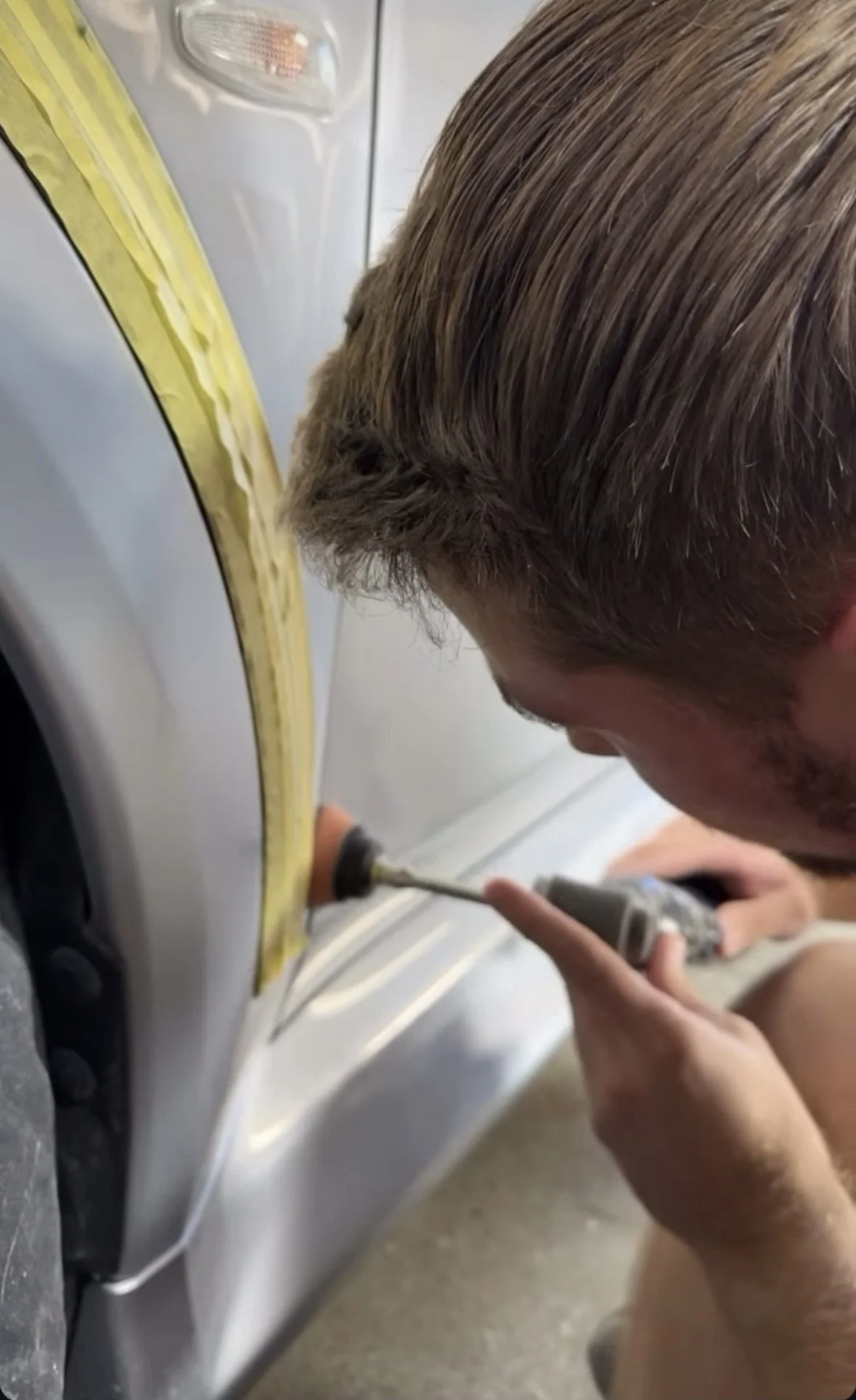
When Correction is complete, your vehicle has paint that is as close to its best possible state as the clear coat allows.
Defects that were degrading the surface are gone. The paint is clean, refined, and - most importantly - in a condition that is worth managing.
-
If Protection follows Correction:
Ceramic coating bonds to a corrected surface at its full potential
The protection layer locks in what the Correction achieved
Each Management visit maintains a surface that is already in its best state
The investment in Correction compounds over time - you never have to start over
-
If Protection is not part of the plan:
Correction still produces a significant improvement in paint condition
The surface will gradually accumulate new defects over time without a durable protective layer
A future Correction may be needed sooner than it would be with Protection applied
We will note this in your vehicle’s record and factors it into any future Management recommendations
Completing Correction makes you eligible for enrollment in Management - the recurring condition maintenance schedule we build specifically for your vehicle. Ask about enrollment when you book your Correction, or after the job is complete.
How Correction is Priced
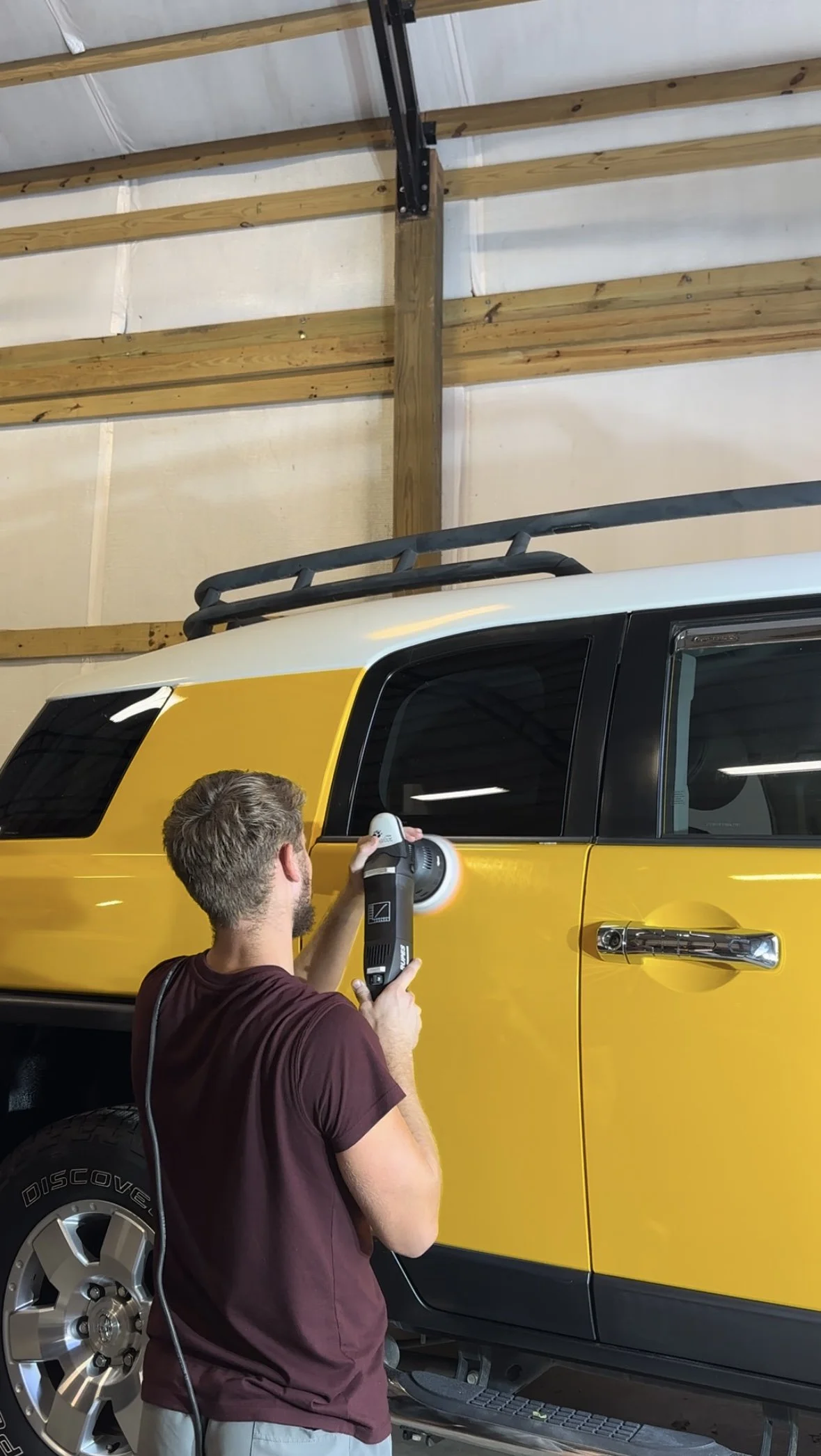
Correction is NOT flat-rate. The time required, the stages involved, and the materials used all depend on the condition of your paint and what the correction needs to accomplish.
A vehicle with light swirls requires different work than one with heavy oxidation and failing clear coat. Quoting them the same price serves neither client honestly.
Correction at KAD begins with $400 - $550 for coupes, sedans, small SUV’s, & large SUV’s / trucks. A firm quote is provided after your Condition Assessment, when we know exactly what the paint requires.
If the assessment reveals that Correction is not the right path for your vehicle - because the paint is already in good shape and Baseline is sufficient, or because the clear coat is too compromised to correct safely, we will tell you that directly.
Ready to find out where your paint stands?
Every Correction starts with a Condition Assessment. We look at the paint, measure the clear coat, and tell you exactly what we recommend - and why.
There’s no pressure and no assumption. If Correction is the right next step, we’ll tell you. If it’s not, we’ll tell you that too.
OR