
The condition we built starts degrading the moment your vehicle leaves the shop. Protection is what slows that down.

After Correction, your vehicle is in the best condition it’s been in - possibly in years. Every surface is clean, properly decontaminated, and where paint work was involved, the defects are gone. And then it goes back outside. UV exposure starts working on the paint. Contamination begins bonding to the surface. The condition that took hours to achieve begins, slowly, and immediately, to erode.
Protection is not a finishing touch. It is what locks in the condition we just built and gives it a fighting chance against everything your vehicle is exposed to every day. Without it, you are maintaining a surface that is actively losing ground. With it, you are maintaining a surface that is actively resisting.
Protection only works as well as what’s underneath
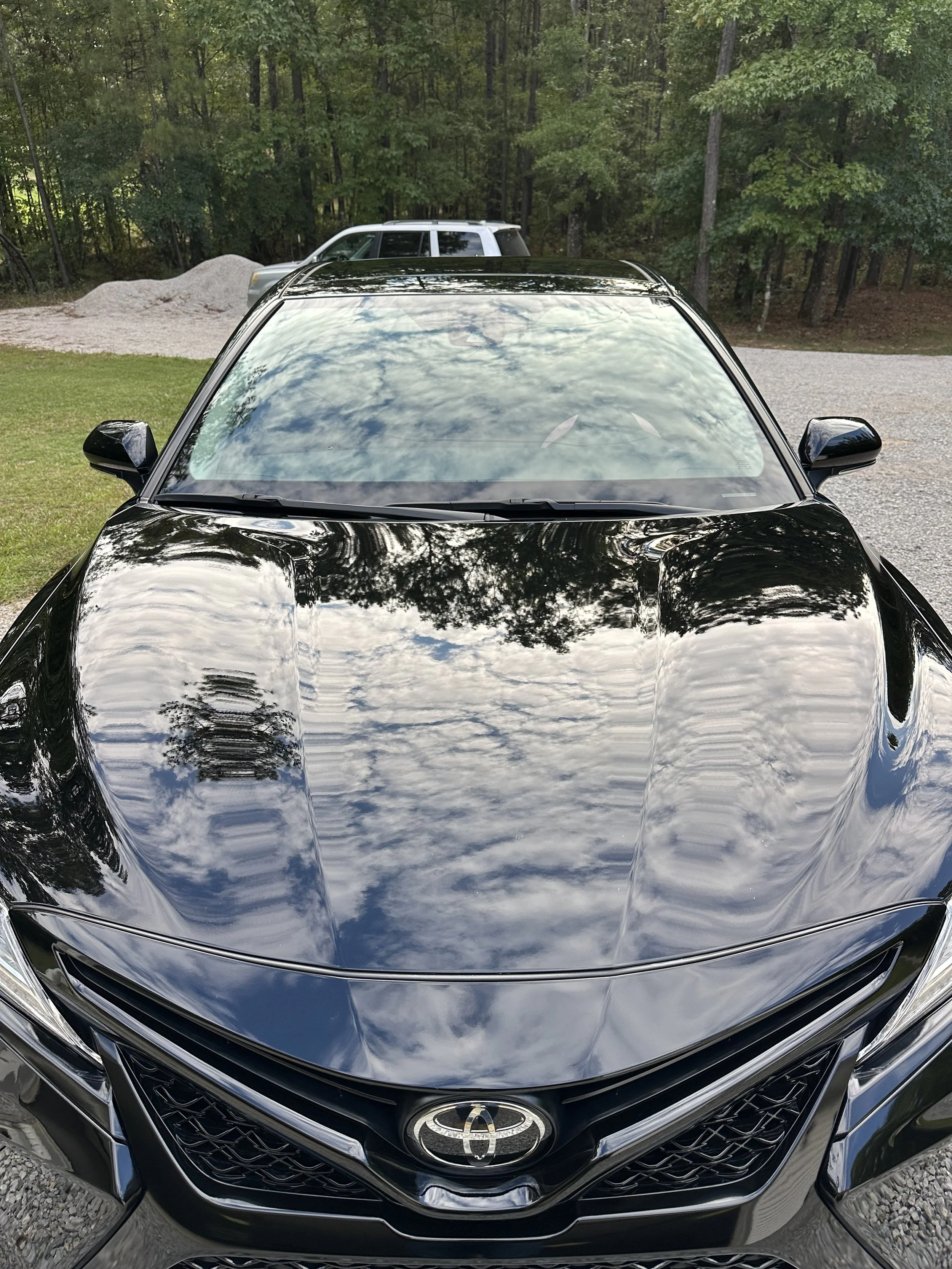
A ceramic coating bonds directly to your paint. Whatever condition the paint is in at the moment of application - that is what gets sealed. Swirls, contamination, oxidation, water spots - anything in the paint when the coating goes on is locked in, not corrected.
This is why Protection follows Correction. Not as a policy, as physics.
A coating applied to a properly prepared surface bonds at full potential. It performs as intended, lasts as long as it should, and protects the condition that the prep work achieved.
A coating applied to an unprepared surface locks in the problem. It may look fine initially. Over time, the issues beneath it become more visible - and more expensive to address, because the coating has to come off first.
We do not apply Protection to vehicles that have not been through Correction with KAD. This is not a restriction. It is the standard that makes Protection worth doing.
Benefits of a Ceramic Coating
-

Extended Durability
Depending on the coating option you choose, ceramic coatings can last between 2-5 years
-

Unmatched Gloss
Waxes can add some shine, but nothing compares to the deep level of gloss that comes from a ceramic coating
-

Single Application
Unlike waxes and sealants, ceramic coatings do not need to be re-applied every couple months - just one time
-

Ultra Hydrophobic
Because of their ability to repel water and dirt, ceramic coatings make regular maintenance a breeze